Tissue Research
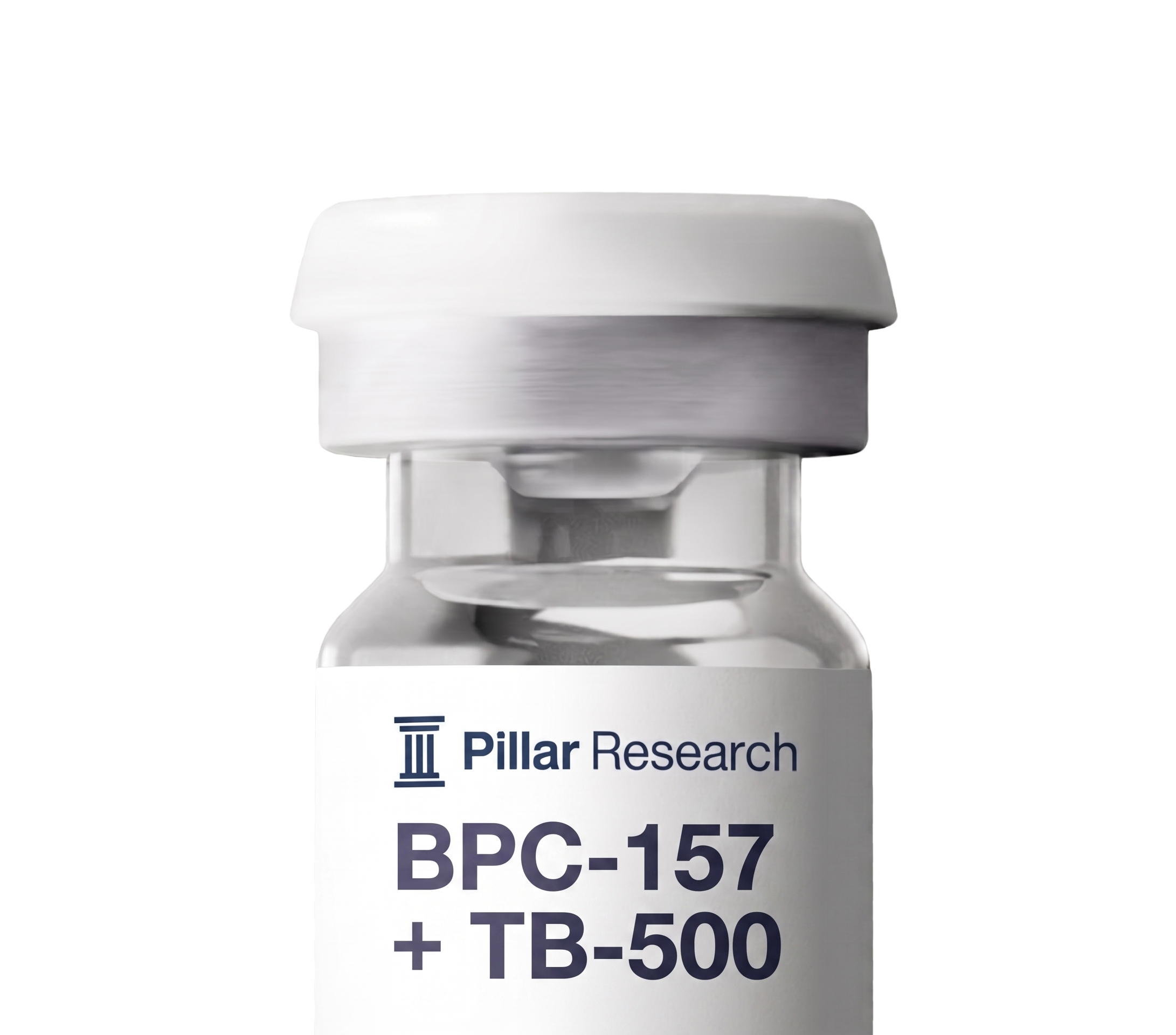
BPC-157 + TB-500 Blend
Buy BPC-157 + TB-500 Blend in Australia - >99.5% HPLC tested with batch-specific COA. Same-day Australian dispatch.
Dual-compound preparation for comparative in vitro tissue signalling models. Each component independently verified by HPLC and mass spectrometry.
Institutional pricing
Volume pricing applies automatically at checkout when commerce is live. For bulk institutional orders or custom quantities, contact pillarresearch@pm.me.
BPC-157 + TB-500 Blend
Estimated launch price: $119 AUD
Add to cart is unavailable until launch. Enter your email and we'll notify you the moment BPC-157 + TB-500 Blend is in stock.
No spam. Unsubscribe anytime. For research use only.
Researchers studying BPC-157 + TB-500 Blend frequently study
BPC-157 + TB-500 Blend Overview
A co-lyophilised research preparation of BPC-157 and TB-500. The two components engage distinct molecular pathways - BPC-157 through nitric oxide and growth-factor signalling, TB-500 through actin sequestration and angiogenic modulation - making the combination a useful tool for protocols probing additive or synergistic mechanisms in tissue research.
History
Combination preparations of BPC-157 and TB-500 emerged in the research literature as investigators began probing the interaction of distinct tissue-signalling pathways. The blend format consolidates two well-characterised research compounds into a single co-formulated reagent for comparative work.
BPC-157 + TB-500 Blend Structure

Research Findings
The combination has been used in preclinical research investigating the interaction of distinct tissue-signalling mechanisms. Each component is independently HPLC and mass spectrometry verified before blending; the blend COA reports both component results.
Key Areas of Research:
- •Combined tissue research: Additive and synergistic mechanism investigation
- •Cytoskeletal × signalling: Cross-pathway preclinical models
- •Comparative protocols: Single-vs-combined treatment arms
References
References are provided for research context. Pillar Research does not endorse or interpret published findings as therapeutic claims.
BPC-157 + TB-500 Blend - research questions
Common questions for Australian researchers about BPC-157 + TB-500 Blend.
What is the BPC-157 + TB-500 blend?
A co-lyophilised research preparation containing both BPC-157 and TB-500. It is supplied as an investigational research blend for in vitro laboratory research under the RUO framework. Each component is independently HPLC and MS verified before blending.
Why combine BPC-157 and TB-500 in research?
The two peptides act on distinct molecular pathways - BPC-157 on signalling cascades and TB-500 on the cytoskeleton directly - so combination preparations support research protocols that probe additive or synergistic effects between the two.
How is each component verified?
Each component is independently HPLC and mass spectrometry verified by an independent third-party Australian laboratory before blending. The batch-specific Certificate of Analysis lists both component results.
Is the blend legal in Australia?
BPC-157 is Schedule 4 and additionally listed in Appendix D of the Poisons Standard. TB-500 is Schedule 4. The blend can be lawfully supplied for in vitro research purposes under the RUO framework with the additional controls applicable to Appendix D substances.
How should the blend be stored?
Store lyophilised vials at 2–8 °C, protected from light and moisture, in the original sealed vial. After reconstitution, store at 2–8 °C for short-term use or −20 °C for longer storage. Avoid repeated freeze–thaw cycles.